
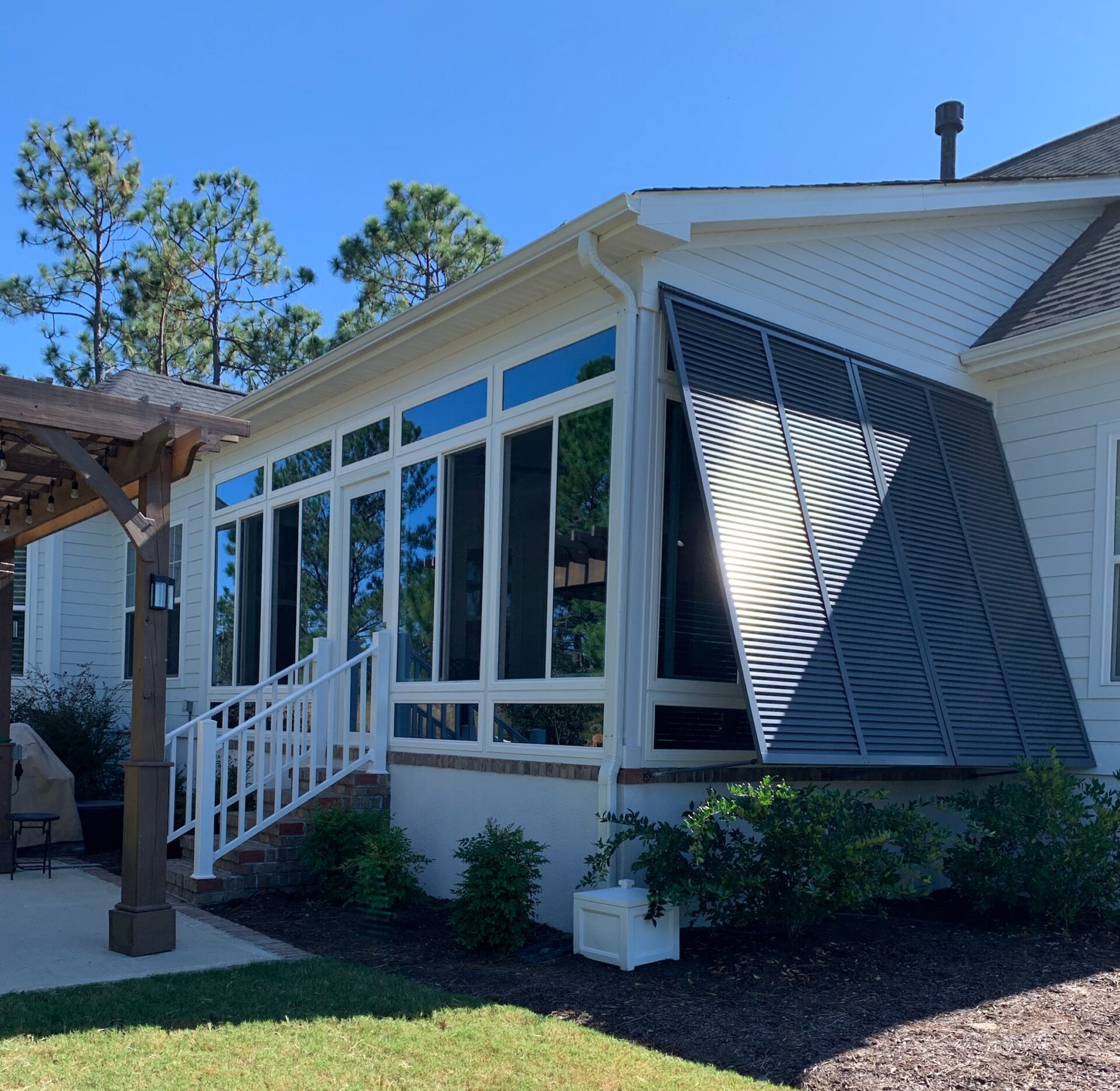
If you’ve spent a spring in places like Wilmington, Raleigh, Myrtle Beach, or Charleston, you know pollen season isn’t subtle. It shows up heavy, lingers for weeks, and somehow finds its way onto every surface. For homeowners who enjoy outdoor living, that raises a practical question: is a screen room or sunroom the better option when allergies are a concern?
Let’s take a closer look so you can make the right call for your home and your comfort.
Screen Room vs Sunroom: What’s the Real Difference?
When comparing a screen room vs sunroom, the key difference is how enclosed the space is.
A screen room (or screened porch) uses mesh panels to keep bugs out while allowing fresh air to move freely. It’s one of the most popular outdoor room ideas for homeowners who want that open, breezy feel. If you’re considering one for your home, you can explore more about our screen rooms.
A sunroom is fully enclosed with glass windows and often insulated. Many can be used year-round and even connect to your home’s HVAC system. Learn more about our sunroom options and how they’re built for comfort in every season.
Both are great additions, but they perform very differently when pollen is in the air.
How Screen Rooms Handle Pollen
Screen rooms are ideal for airflow, but that same feature works against you during pollen season.
In areas like Wilmington, Raleigh, Myrtle Beach, and Charleston, tree and grass pollen levels can be especially high in the spring. Because screens don’t filter fine particles, pollen passes right through and settles on everything inside.
Pros:
- Open-air feel with natural ventilation
- Lower upfront investment compared to a sunroom
- Great for enjoying mild weather outside of peak pollen
Cons:
- Pollen enters easily
- Furniture and surfaces need constant cleaning
- Not ideal for allergy-sensitive households
If you’re comparing sunroom vs screened porch options with allergies in mind, this is where screen rooms tend to fall short.
Why Sunrooms Perform Better for Allergies
A sunroom creates a sealed environment that helps keep pollen outside where it belongs.
With insulated walls, glass windows, and optional climate control, a sunroom limits the amount of pollen that can enter. In regions like coastal and inland North Carolina and along the South Carolina coast, that can make a noticeable difference in day-to-day comfort.
Pros:
- Keeps pollen, dust, and debris out
- Comfortable across multiple seasons
- Can be integrated with HVAC for better air control
- Easier to maintain during peak pollen months
Cons:
- Higher investment than a screened porch cost
- Less direct airflow compared to a screen room
If air quality is a priority, a fully enclosed space like one of our custom sunrooms is often the best solution.
Patio Enclosure Options: Finding the Right Fit
If you’re exploring different patio enclosure options, there’s a range of choices depending on your goals.
- Screen Rooms: Best for airflow and budget, but minimal pollen protection
- Three-Season Rooms: A hybrid option with vinyl or acrylic panels for partial protection
- Four-Season Sunrooms: Fully enclosed and insulated for maximum comfort and allergen control
Not sure which direction to go? Take a look at all of our patio enclosure options to compare what fits your home best.
Which One Should You Choose?
If your goal is to enjoy fresh air and a more open outdoor experience, a screen room is still a solid option.
But if you’re trying to actually avoid pollen and create a cleaner, more controlled environment, a sunroom is the better long-term solution.
It allows you to enjoy natural light and outdoor views without constantly dealing with allergens.
Build a Space You Can Enjoy Year-Round
At Southern Exposure Sunrooms, we help homeowners across Wilmington, Raleigh, Myrtle Beach, and Charleston design spaces that truly work for how they live.
Whether you’re comparing a screen room vs sunroom, exploring outdoor room ideas, or weighing different patio enclosure options, we’re here to help you make the right choice.
If pollen season has made your outdoor space harder to enjoy, it might be time for an upgrade that actually solves the problem.
Start exploring your options today and get in contact with a member of our team to start your project!