
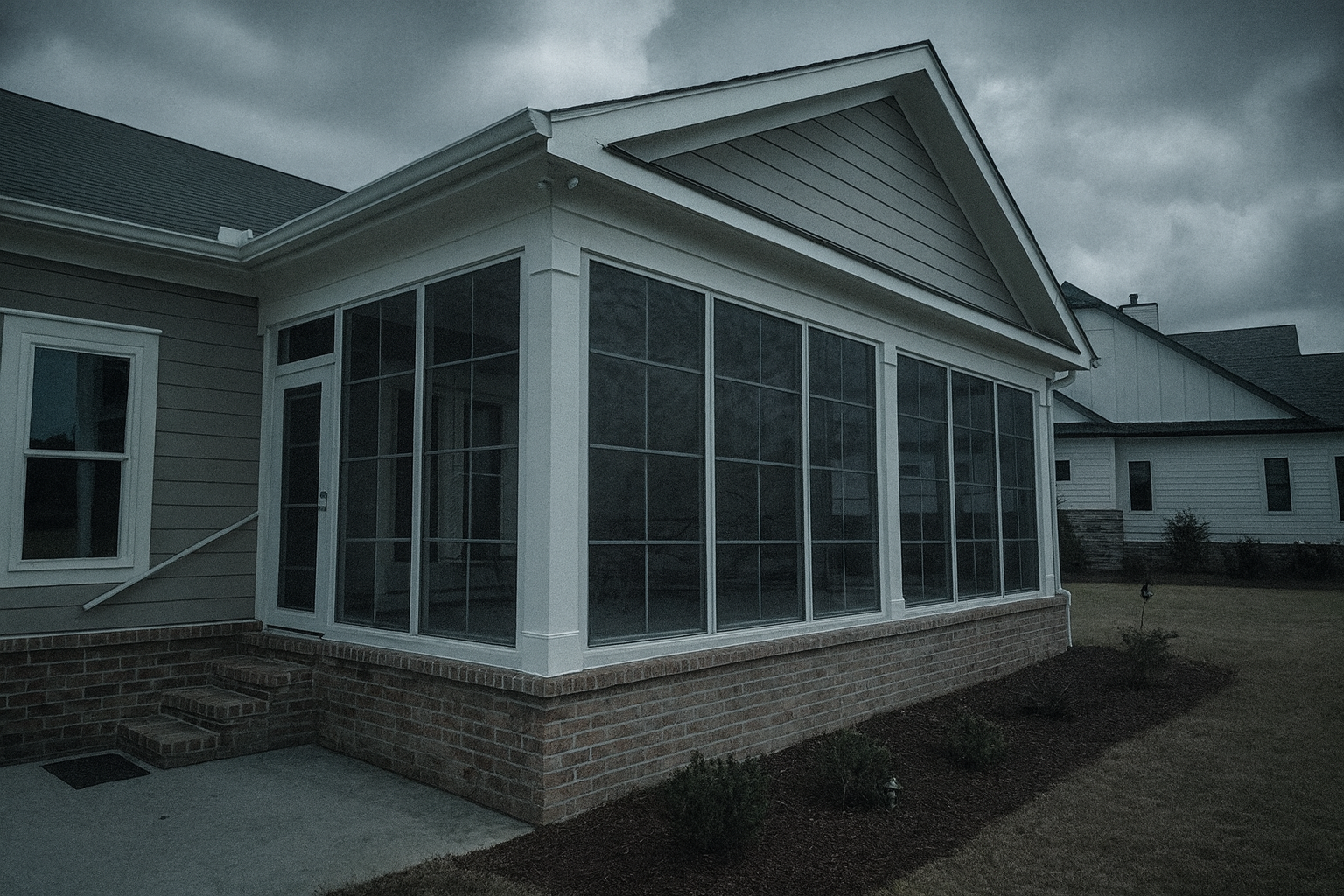
A sunroom or screen room can be your favorite spot at home, but once temperatures drop, these spaces need a little attention to stay comfortable and protected. Winterizing now helps prevent damage, cuts down on energy loss, and lets you enjoy the room more often through the colder months. Here are a few simple steps to prepare your space for the season.
Seal Air Leaks
Start by checking around windows, doors, floor lines, and any older framing. Even small gaps can let in drafts and moisture. Weatherstripping, caulk, and updated seals make a big difference and help keep the space warmer without driving up energy costs.
Upgrade or Add Insulation
If your sunroom feels noticeably colder than the rest of the house, insulation may be the missing layer. Consider insulating the ceiling, walls, or knee walls, depending on your room’s design. Thermal curtains or insulated shades can also help hold heat while reducing glare.
Protect Screens and Vinyl Panels
Screen rooms take a beating in winter weather. Remove or cover delicate screens if your area sees strong winds. For vinyl or acrylic panels, wipe them clean and make sure they are fully latched. This prevents warping and cracking when temperatures dip.
Consider a Heating Option
A small electric heater, ceramic tower heater, or ductless mini split can make your sunroom usable on mild winter days. Choose a safe, efficient option that suits the size of the room. If you already have a heat source, give it a quick checkup to ensure it’s running properly.
Check Roofs, Gutters, and Drainage
Leaves, branches, and debris can collect around your sunroom roofline and gutters. Clearing them out prevents water backups that could lead to leaks or structural damage. If your screen room sits on a slab, make sure water drains away from the structure during heavy rain.
Refresh the Fixtures and Furniture
Winter is a good time to clean and protect any furniture or flooring that sits close to windows. UV rays are still active in colder months, so adding protective films or switching to fade resistant materials is worth considering. Cushions and fabrics can be stored indoors if your screen room is not fully enclosed.
Plan Ahead for Upgrades
If your room feels too cold in winter or too hot in summer, you may be due for an upgrade. Options like converting screen rooms into three season rooms, adding energy efficient windows, or updating framing can help you get more use out of the space year round.